FTC Safeguards Rule

🛡️ FTC Safeguards Rule — Written Security Programs

FTC Safeguards Rule: Compliance for the Businesses That Didn’t Know They’re Covered

The Safeguards Rule quietly covers far more than banks: CPA firms, auto dealers, mortgage brokers, tax preparers, collection agencies, and anyone else the FTC deems a “financial institution.” It requires a written security program with named ownership — and enforcement began in earnest with penalties that get board attention.

  • Applicability review — find out definitively whether the Rule covers you
  • A written information security program (WISP) that matches your operation
  • The nine required elements implemented, not just documented
  • A designated Qualified Individual with real reporting duties
  • Annual risk assessments and continuous monitoring the Rule mandates
⭐ 5.0 Google RatingMicrosoft PartnerSOC 2 Ready24/7 Live SupportMSP 501 Top 50

Am I Covered? Find Out in One Call

Describe what your business does with customer financial data. We will tell you whether the Rule applies and what a compliant program looks like at your size.

8minAvg. Help Desk Response
24/7Live, Staffed Coverage
20+Years Running Help Desks
85%Issues Fixed Proactively
#36MSP 501 Nationally
200+Businesses Protected
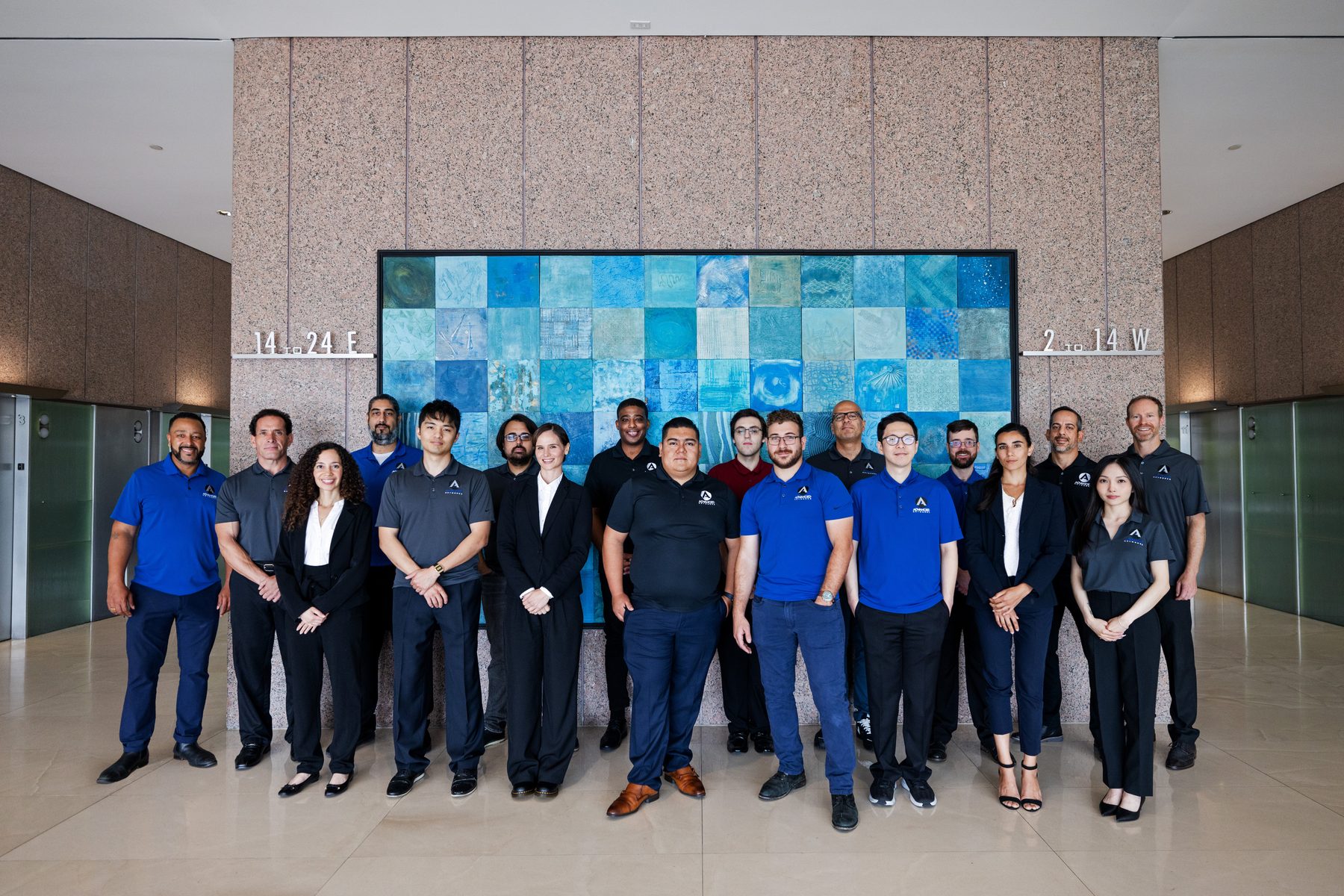
The Advanced Networks team

The Desk That Answers
Eight minutes, any hour
Advanced Networks advisors working with a client

Hands-On When It Counts
Onsite from our Westwood office
The Advanced Networks engineering team

One Accountable Team
No vendor ping-pong
The Rule Nobody Told You About

A “Financial Institution” Is Broader Than You Think

The Gramm-Leach-Bliley Act delegated consumer financial data protection to the FTC for businesses outside banking regulators’ reach — and the FTC’s definition sweeps wide. If you extend credit, arrange financing, prepare taxes, handle client funds, or even routinely transmit customers’ financial data to lenders, the Safeguards Rule likely applies. Most covered small businesses have never heard of it until a breach, an examiner, or a franchise agreement brings it up.

Since the amended Rule took effect, requirements are specific rather than aspirational: encryption of customer information, MFA for anyone accessing it, a written incident response plan, continuous monitoring or annual penetration testing, and — the part that changes organizational behavior — a designated Qualified Individual who reports on the program to your board or ownership in writing, annually.

Scale matters and the Rule acknowledges it: businesses handling information on fewer than five thousand consumers are exempt from several written-program elements. Part of our applicability review is determining which tier you fall in — many small firms discover their obligations are real but lighter than the headlines suggested.

  • Applicability and exemption analysis in plain language
  • WISP written to your actual data flows, not a template
  • Qualified Individual duties we can staff through our vCISO service
  • Evidence trail ready for FTC inquiry, franchisor, or carrier review
8min
Average First ResponseAny hour, any day
<1hr
Urgent Onsite ReachWithin Los Angeles
85%
Resolved ProactivelyBefore you notice
1
Team AccountableHelp desk to root cause
The Nine Required Elements

The Nine Elements of a Compliant Program

Section 314.4, translated from regulation into work — the first six are where the effort lives

Qualified Individual
A named person accountable for the program who reports annually, in writing, to your board or owners. Outsourceable — but accountability is not.
Written Risk Assessment
A documented assessment of where customer financial information lives, what threatens it, and how controls address each risk — refreshed on a schedule.
Access Controls & MFA
Access limited to who needs it, reviewed periodically, with multi-factor authentication for any system holding customer information.
Encryption & Data Inventory
Know every place customer data sits, encrypt it at rest and in transit, and securely dispose of what you no longer need.
Monitoring or Annual Pen Testing
Either continuous monitoring of your systems — or annual penetration testing plus semiannual vulnerability assessments. Most firms find monitoring cheaper and more useful.
Incident Response Plan
A written plan for the breach you hope never happens: containment, notification obligations, and recovery, with roles named in advance.
Getting Compliant, Step by Step

A Realistic 90-Day Path to Compliance

What standing up a Safeguards program actually looks like for a covered small business

01
Weeks 1–2: Applicability & Data Map
Confirm coverage, identify every system and vendor touching customer financial data, and set the program scope honestly.
02
Weeks 3–4: Risk Assessment
Assess threats against the data map and produce the written risk assessment the Rule explicitly requires.
03
Weeks 5–8: Control Remediation
Close the technical gaps: MFA everywhere customer data lives, encryption, access reviews, disposal procedures, and monitoring deployment.
04
Weeks 9–10: WISP & IR Plan
Write the security program and incident response plan around the controls that now exist — documents that describe reality.
05
Weeks 11–12: Training & Handoff
Train staff on the program, brief the Qualified Individual, and deliver the annual board report template with its first draft completed.
06
Ongoing: Operate & Report
Monitoring runs, access reviews recur, the risk assessment refreshes annually, and the board report goes out on schedule — compliance as an operation, not an event.
Working With Us

What Clients Say About Our Support

LA companies on the switch — cost, coverage, and control.

★★★★★

“When our IT guy left, we outsourced instead of rehiring. Coverage tripled, spend dropped 30%, and nobody has looked back.”

Brian Foster CFO, Horizon Cloud Software · Santa Monica
★★★★★

“The transition month was the tell: everything documented, nothing lost, tickets closing same-day by week two.”

Emily Carter Chief Financial Officer, Blue Harbor Technologies · Westwood
★★★★★

“We grew from one warehouse to three. IT scaled with a phone call — no hiring, no drama, same flat structure.”

James Bennett IT Director, Summit Digital Systems · Glendale
Straight Answers

FTC Safeguards Rule FAQ

What LA owners ask before outsourcing IT.

Does the FTC Safeguards Rule apply to my business?
If you are significantly engaged in activities financial in nature — extending credit, arranging financing, tax preparation, payment processing, wiring client funds — the FTC likely considers you a financial institution. Auto dealers, CPA and tax firms, mortgage and finance brokers, and collection agencies are the classic surprised categories. An applicability review settles it definitively.
What happens if we ignore it?
Enforcement is real: the FTC has pursued covered businesses with penalties reaching thousands of dollars per violation per day, plus consent orders imposing decades of oversight. The quieter costs arrive first — franchisors, lenders, and insurers increasingly demand proof of Safeguards compliance contractually.
What is a Qualified Individual — and can we outsource it?
The Rule requires one named person to own the program and report annually in writing to your board or ownership. It explicitly permits outsourcing the role — our vCISO service commonly staffs it — but a senior person inside your business must retain oversight responsibility.
How does the small-business exemption work?
Businesses maintaining customer information on fewer than 5,000 consumers are exempt from the written risk assessment, continuous monitoring/pen-testing mandate, the written IR plan, and the annual board report — but not from the core duties: access controls, encryption, MFA, and a designated program owner still apply.
We already have an IT provider. What changes?
Your IT provider likely runs some required controls already — the gap is usually the program layer: the data inventory, written risk assessment, WISP, incident response plan, and the reporting cadence. We either work alongside your provider to add that layer or fold it into our managed services.
Does Safeguards compliance overlap with other frameworks?
Substantially. Safeguards requirements map cleanly onto NIST CSF categories and overlap with GLBA banking guidance, PCI DSS, and state privacy laws. Firms that owe several regimes should build one control set and map it outward — the Rule becomes a view of the program rather than another program.

Advanced Networks — Los Angeles Office · Cybersecurity Compliance Services · GLBA Compliance · Open 24 hours

Explore the rest of our Los Angeles services: FTC Safeguards for Accounting Firms · Compliance Readiness Assessment · Virtual CISO Services · IT for Accounting Firms · IT for Financial Services — or compare with our Cyber Security Services.

Get Started

Settle the Applicability Question This Week

One call to determine whether the Rule covers you, which tier you fall in, and what a right-sized program costs. No scare tactics — just the answer.