How can you enhance cybersecurity to protect your sensitive data? For LA & OC Businesses

The Growing Importance of CybersecurityThe Growing importance of Cyber Security

In the rapidly evolving landscape of the digital age, the growing importance of cybersecurity cannot be overstated. As technology continues to advance, our reliance on interconnected systems, cloud computing, and digital platforms has become increasingly integral to both personal and organizational operations. With this dependence, however, comes a heightened vulnerability to malicious cyber threats. Cybersecurity, therefore, plays a pivotal role in ensuring the integrity, confidentiality, and availability of sensitive data in this interconnected world.

The Pervasive Threats to Sensitive Data

The proliferation of cyber threats poses a substantial risk to sensitive data across various sectors. From financial institutions to healthcare organizations, and from government agencies to private enterprises, no entity is immune to the diverse range of threats such as ransomware, phishing attacks, and data breaches. The potential consequences of these threats extend beyond financial losses to include reputational damage and, in some cases, compromise of national security. Acknowledging the pervasive nature of these threats underscores the urgency of implementing robust cybersecurity measures.

The Need for a Comprehensive Approach

Addressing cybersecurity challenges requires a comprehensive and multifaceted approach. A fragmented response is inadequate against the sophisticated tactics employed by cyber adversaries. A holistic strategy encompasses proactive risk management, stringent access controls, continuous monitoring, and ongoing education and training for personnel. Additionally, staying abreast of emerging threats and evolving technologies is imperative in adapting security measures to effectively thwart new and advanced cyber threats. By adopting a comprehensive approach, organizations can establish a resilient defense against the ever-evolving landscape of cyber risks, safeguarding sensitive data and fortifying their digital ecosystems.

Understanding the Threat Landscape

Evolving Cyber Threats

  1. Malware and Ransomware Attacks: Malware and ransomware attacks represent a persistent and evolving threat in the digital landscape. Malicious software, or malware, is designed to infiltrate computer systems with the intent of causing harm, such as stealing sensitive information or disrupting normal operations. Ransomware, a specific type of malware, encrypts a victim’s files and demands a ransom for their release. These attacks continue to adapt, leveraging sophisticated techniques to evade detection and target both individuals and organizations.
  2. Phishing and Social Engineering: Phishing and social engineering tactics exploit human psychology to manipulate individuals into divulging confidential information or performing actions that may compromise security. Phishing involves deceptive emails, messages, or websites that appear legitimate but are crafted to trick recipients into providing sensitive data. Social engineering goes beyond technology, relying on psychological manipulation to gain unauthorized access. As these tactics become more sophisticated, individuals and organizations must remain vigilant and employ effective cybersecurity awareness programs.
  3. Insider Threats: Insider threats involve individuals within an organization who misuse their access and privileges to compromise security. These threats may be intentional, such as disgruntled employees seeking revenge, or unintentional, such as employees inadvertently disclosing sensitive information. Organizations need to implement robust access controls, monitor employee activities, and foster a culture of cybersecurity awareness to mitigate the risks associated with insider threats.

Targeted Industries and Vulnerabilities:

Cyber threats are not evenly distributed across all industries; certain sectors are more frequently targeted due to the nature of their operations or the value of the data they handle. Financial institutions, healthcare organizations, and government agencies are often prime targets due to the abundance of sensitive information they possess. Vulnerabilities arise from outdated software, unpatched systems, or inadequate cybersecurity measures. Organizations must conduct regular risk assessments and invest in comprehensive cybersecurity strategies to address industry-specific challenges.

Real-world Examples of Data Breaches:

Examining real-world examples of data breaches provides valuable insights into the consequences of cybersecurity vulnerabilities. Incidents such as the Equifax breach in 2017, where personal information of millions was compromised, underscore the importance of securing sensitive data. Additionally, the SolarWinds supply chain attack in 2020 highlighted the potential risks associated with third-party dependencies. These incidents emphasize the need for proactive cybersecurity measures, including continuous monitoring, incident response plans, and collaboration within the cybersecurity community.

In summary, comprehending the evolving cyber threat landscape requires an awareness of the diverse tactics employed by malicious actors, industry-specific vulnerabilities, and real-world examples of data breaches. This understanding is crucial for individuals and organizations to develop effective cybersecurity strategies and safeguard against the ever-changing digital threats.

Key Principles of Cybersecurity

Confidentiality, Integrity, and Availability (CIA Triad):

The CIA Triad is a foundational concept in cybersecurity, outlining three essential principles that form the basis of a robust security framework.

Confidentiality:

Confidentiality ensures that sensitive information is protected from unauthorized access. This principle focuses on limiting access to data and resources only to those who are authorized. Encryption, access controls, and secure communication protocols are key components in maintaining confidentiality. By implementing these measures, organizations can safeguard proprietary information, personal data, and intellectual property from potential breaches.

Integrity:

Integrity emphasizes the accuracy and reliability of data and systems. The goal is to prevent unauthorized alteration or tampering of information. Implementing data integrity measures involves using checksums, digital signatures, and access controls. By ensuring the consistency and trustworthiness of data, organizations can maintain the reliability of their systems and build trust with users.

Availability:

Availability ensures that systems and data are accessible and functional when needed. Downtime or disruptions can have severe consequences, making it crucial to design systems that are resilient and capable of withstanding various attacks or failures. Redundancy, failover mechanisms, and disaster recovery plans are integral to maintaining availability. By minimizing downtime, organizations can ensure that critical services remain operational and accessible to users.

Defense-in-Depth Strategy:

The Defense-in-Depth strategy involves implementing multiple layers of security controls to protect against a diverse range of cyber threats. This approach recognizes that no single security measure can provide absolute protection, and a combination of defenses is necessary to create a comprehensive security posture.

Network Security:

Securing the network involves using firewalls, intrusion detection and prevention systems, and virtual private networks (VPNs) to monitor and control incoming and outgoing traffic. By implementing these measures, organizations can defend against unauthorized access and mitigate the risk of network-based attacks.

Endpoint Security:

Protecting individual devices such as computers, smartphones, and servers is crucial. Endpoint security measures include antivirus software, endpoint detection and response (EDR) tools, and device encryption. This helps prevent malware infections, unauthorized access, and data breaches originating from individual devices.

Physical Security:

Physical security is often overlooked but is a critical component of defense in depth. Securing data centers, server rooms, and other critical infrastructure against physical threats like theft, vandalism, or natural disasters complements digital security measures and ensures the overall resilience of an organization’s infrastructure.

Continuous Monitoring and Threat Detection:

Continuous monitoring involves the real-time observation of systems, networks, and data to identify and respond to security incidents promptly. This proactive approach is essential for staying ahead of evolving cyber threats.

Security Information and Event Management (SIEM):

SIEM systems aggregate and analyze log data from various sources to detect and respond to security incidents. By correlating events and identifying patterns, organizations can swiftly identify abnormal activities and potential threats.

Intrusion Detection Systems (IDS) and Intrusion Prevention Systems (IPS):

IDS and IPS are critical components for monitoring and preventing unauthorized access. IDS detects suspicious activities, while IPS actively blocks or mitigates potential threats in real-time. Together, they enhance an organization’s ability to respond to security incidents promptly.

Vulnerability Management:

Regularly assessing and patching vulnerabilities in software, systems, and networks is crucial for maintaining a secure environment. Continuous monitoring allows organizations to identify and address vulnerabilities promptly, reducing the risk of exploitation by malicious actors.

In conclusion, the key principles of confidentiality, integrity, and availability, coupled with the defense-in-depth strategy and continuous monitoring, form the cornerstone of effective cybersecurity. By adopting these principles, organizations can establish a resilient and adaptive security posture in the ever-evolving landscape of cyber threats.

Building a Robust Cybersecurity Framework

Building a robust cybersecurity framework is imperative in today’s digital landscape to safeguard sensitive information and maintain the integrity of systems. This framework encompasses various components aimed at identifying, mitigating, and preventing cyber threats. Let’s delve into key aspects of such a framework:

Risk Assessment and Management:

  • Identifying and Prioritizing Assets:

Begin by cataloging all organizational assets, ranging from hardware and software to data repositories. Prioritize these assets based on their criticality to business operations and the potential impact of a security breach.

  • Assessing Vulnerabilities and Threats:

Conduct regular vulnerability assessments to identify potential weaknesses in systems. Simultaneously, assess current and emerging threats that could exploit these vulnerabilities. Prioritize these threats based on their likelihood and potential impact.

Access Control and Authentication:

Implementing stringent access controls is crucial for preventing unauthorized access to sensitive information.

User Access Management:

Define and enforce user roles and permissions, ensuring that individuals have access only to the resources necessary for their roles.

Multi-Factor Authentication (MFA):

Enhance access security by implementing MFA, requiring users to provide multiple forms of identification before gaining access.

Encryption for Data Protection:

Utilize encryption to protect data at rest and in transit, mitigating the risk of unauthorized access.

Data-at-Rest Encryption:

Encrypt stored data to prevent unauthorized access in case of physical theft or unauthorized access to storage devices.

Data-in-Transit Encryption:

Implement secure communication protocols to encrypt data during transmission, safeguarding it from interception and tampering.

Regular Software Updates and Patch Management:

Frequently updating software is crucial to addressing vulnerabilities and improving overall system security.

Patch Management:

Establish a robust patch management system to regularly update and patch software vulnerabilities. This includes operating systems, applications, and firmware.

Vulnerability Scanning:

Conduct regular vulnerability scans to identify and prioritize systems and software that require immediate attention.

By integrating these components, organizations can create a resilient cybersecurity framework that adapts to evolving threats. Continuous monitoring, regular training, and adapting to emerging cybersecurity trends will further strengthen the overall security posture. Remember, cybersecurity is an ongoing process that requires vigilance and proactive measures to stay ahead of potential threats.

Employee Training and Awareness

Importance of Cybersecurity Education:

In today’s interconnected digital landscape, cybersecurity education is paramount. Employees are often the first line of defense against cyber threats. Understanding the fundamentals of cybersecurity empowers them to recognize potential risks, safeguard sensitive information, and contribute to the overall security of the organization. Cybersecurity education should cover various topics such as identifying social engineering tactics, recognizing malicious software, and understanding the importance of data privacy.

Recognizing and Avoiding Phishing Attempts:

Phishing attacks remain a prevalent threat, and employees must be equipped with the knowledge to identify and thwart these attempts. Training programs should educate employees on the common characteristics of phishing emails, such as suspicious links, unexpected attachments, or requests for sensitive information. Regular simulated phishing exercises can provide hands-on experience, helping employees develop a heightened sense of skepticism and critical thinking when interacting with emails or other communication channels.

Best Practices for Password Management:

Passwords are the frontline defense for securing access to sensitive systems and information. Training should emphasize the importance of creating strong, unique passwords and the risks associated with using easily guessable ones. Employees should be educated on the significance of multi-factor authentication (MFA) and its role in adding an extra layer of security. Regular updates on password policies and best practices, coupled with guidance on securely storing passwords, contribute to a robust defense against unauthorized access.

In summary, an effective Employee Training and Awareness program in cybersecurity serves as a proactive measure against evolving cyber threats. By instilling a culture of security consciousness, organizations can minimize the risk of breaches, protect sensitive data, and foster a resilient cybersecurity environment. Regular updates and refresher courses ensure that employees stay informed about the latest threats and maintain a vigilant stance in the face of ever-changing cybersecurity challenges.

Implementing Advanced Technologies

Implementing Advanced Technologies in cybersecurity is crucial for safeguarding digital assets and mitigating evolving threats. Three key components that play a pivotal role in fortifying cyber defenses are Artificial Intelligence (AI) and Machine Learning (ML), Next-Generation Firewalls (NGFWs), and Endpoint Security Solutions.

Artificial Intelligence and Machine Learning in Cybersecurity:

Artificial Intelligence and Machine Learning have revolutionized the field of cybersecurity by enabling proactive threat detection and response. AI algorithms can analyze vast amounts of data in real-time, identifying patterns and anomalies that might go unnoticed by traditional security measures. Machine Learning models continuously learn from new data, adapting to emerging threats and enhancing the overall efficacy of cybersecurity systems. AI-driven tools also automate routine tasks, allowing cybersecurity professionals to focus on strategic decision-making and threat intelligence analysis.

Next-Generation Firewalls:

Next-Generation Firewalls (NGFWs) represent a significant leap forward from traditional firewalls. These advanced security solutions combine traditional firewall capabilities with additional features such as intrusion prevention, application awareness, and deep packet inspection. NGFWs operate at the application layer, providing granular control over network traffic and preventing unauthorized access. With the ability to analyze and filter content, NGFWs enhance security by blocking malicious websites, malware, and other threats. Additionally, they offer advanced threat intelligence and can integrate with other security components to create a comprehensive defense strategy.

Endpoint Security Solutions:

Endpoint Security Solutions focus on protecting individual devices (endpoints) such as computers, mobile devices, and servers. With the increasing sophistication of cyber threats, securing endpoints has become paramount. These solutions encompass antivirus software, encryption tools, and advanced threat detection capabilities. Endpoint protection employs a multi-layered approach, combining signature-based detection, behavioral analysis, and heuristic analysis to identify and thwart diverse threats. As remote work becomes more prevalent, ensuring the security of endpoints is crucial for maintaining the integrity of organizational networks.

In conclusion, the implementation of AI and ML in cybersecurity enhances threat detection and response, NGFWs provide advanced network defense, and Endpoint Security Solutions secure individual devices in an interconnected digital landscape. Combining these advanced technologies creates a robust cybersecurity framework that is adaptive, proactive, and capable of defending against the ever-evolving threat landscape. Organizations that invest in these technologies not only bolster their security posture but also position themselves to stay ahead in the ongoing arms race against cyber adversaries.

Collaborative Approaches to Cybersecurity

Collaborative approaches to cybersecurity have become increasingly crucial in addressing the ever-evolving landscape of cyber threats. Organizations and governments worldwide recognize the need to work together to strengthen their collective defenses and ensure the resilience of critical infrastructures. Three key pillars of collaborative cybersecurity efforts include Public-Private Partnerships, Information Sharing and Threat Intelligence, and adherence to Industry Standards and Regulations.

Public-Private Partnerships (PPP):

Public-Private Partnerships play a pivotal role in fostering collaboration between government entities and private organizations. By leveraging the strengths of both sectors, PPPs can facilitate the exchange of information, resources, and expertise. Governments can provide regulatory frameworks, threat intelligence, and law enforcement capabilities, while private entities contribute innovative technologies, operational insights, and real-time data on emerging threats. This synergy enhances the overall cybersecurity posture and enables a more comprehensive response to cyber incidents.

Information Sharing and Threat Intelligence:

Timely and accurate information is a critical asset in the cybersecurity realm. Establishing mechanisms for information sharing and threat intelligence exchange allows organizations to stay ahead of cyber adversaries. Collaborative platforms enable the swift dissemination of threat indicators, attack patterns, and vulnerabilities among participating entities. This collective knowledge empowers organizations to proactively implement security measures, update defenses, and respond effectively to emerging threats. Initiatives such as the sharing of cybersecurity incident reports and best practices contribute to a more resilient and interconnected cybersecurity ecosystem.

Industry Standards and Regulations:

Adherence to industry standards and regulations is fundamental for establishing a baseline of cybersecurity practices across different sectors. Collaborative efforts in developing and implementing these standards ensure a unified and robust defense against cyber threats. Governments and industry stakeholders work together to define and enforce regulations that promote cybersecurity best practices, data protection, and incident response protocols. Compliance with these standards not only strengthens individual organizations but also fosters a culture of shared responsibility, creating a more secure digital environment for all stakeholders.

In conclusion, collaborative approaches to cybersecurity, including Public-Private Partnerships, Information Sharing and Threat Intelligence, and Industry Standards and Regulations, are essential for combating the dynamic and sophisticated nature of cyber threats. By leveraging the collective strength of governments, private sector entities, and regulatory frameworks, the global community can create a more resilient and secure cyberspace for the benefit of individuals, businesses, and nations alike.

Incident Response and Recovery

Incident Response and Recovery (IRR) is a crucial component of an organization’s cybersecurity framework, encompassing a systematic approach to handling and mitigating security incidents. This involves the development of a robust Incident Response Plan (IRP), regular testing of incident response procedures, and a continuous learning process from past incidents to enhance future responses.

Developing an Incident Response Plan (IRP):

Creating a comprehensive Incident Response Plan is foundational to effective incident management. The IRP should outline a well-structured and documented set of procedures to follow when a security incident occurs. This involves defining the roles and responsibilities of the incident response team, establishing communication channels, and determining the escalation process. The plan should also include incident identification, containment, eradication, recovery, and lessons learned phases. Regularly updating and refining the IRP in response to changes in the threat landscape, technology, or organizational structure is essential to ensure its effectiveness.

Regularly Testing Incident Response Procedures:

Testing incident response procedures through simulation exercises is vital for assessing the preparedness of the organization to handle real-world security incidents. These exercises can take the form of tabletop simulations, red teaming, or even full-scale drills. Testing helps identify gaps or weaknesses in the incident response process, enabling organizations to refine their procedures and train their response teams effectively. Regular testing not only validates the efficacy of the IRP but also ensures that personnel are familiar with their roles and can respond promptly and effectively in a high-pressure situation.

Learning from Past Incidents to Improve Future Responses:

Post-incident analysis plays a critical role in enhancing an organization’s resilience to cyber threats. After an incident is successfully mitigated, a thorough review should be conducted to identify the root causes, tactics, techniques, and procedures employed by the threat actor. This analysis should extend beyond technical aspects to include an examination of procedural and human factors. Documenting these findings and incorporating them into the organization’s knowledge base allows for continuous improvement. This iterative process helps organizations adapt their IRPs, update security controls, and provide additional training to personnel based on the lessons learned from each incident.

In summary, Incident Response and Recovery is a dynamic and evolving aspect of cybersecurity, requiring proactive measures such as the development of a comprehensive IRP, regular testing of procedures, and a continuous learning culture that draws insights from past incidents. By adhering to these principles, organizations can strengthen their ability to detect, respond to, and recover from security incidents effectively.

Regulatory Compliance

Regulatory Compliance in the realm of data protection is a critical facet that organizations must meticulously navigate to uphold the integrity of their operations. This entails a comprehensive understanding of various data protection regulations worldwide.

Overview of Data Protection Regulations:

In today’s interconnected digital landscape, data protection regulations have become increasingly stringent to safeguard individuals’ privacy and maintain the trust of stakeholders. A pivotal aspect is the General Data Protection Regulation (GDPR) in the European Union, which sets a high standard for data protection globally. It mandates organizations to acquire explicit consent for data processing, disclose data usage purposes, and implement robust security measures.

Additionally, other jurisdictions, such as the California Consumer Privacy Act (CCPA) in the United States and the Personal Information Protection and Electronic Documents Act (PIPEDA) in Canada, have introduced similar frameworks. These regulations emphasize transparency, accountability, and the rights of individuals concerning their personal information.

Ensuring Compliance with Global Standards:

To navigate the complex landscape of data protection regulations, organizations need to adopt a proactive approach. This involves establishing a robust compliance framework that aligns with global standards. Implementing privacy by design principles, conducting regular privacy impact assessments, and appointing a Data Protection Officer are essential steps in this direction.

Moreover, organizations operating across borders must be cognizant of the variances in regulations. Tailoring compliance strategies to adhere to specific jurisdictional requirements ensures a comprehensive and adaptable approach. Utilizing encryption technologies, access controls, and secure data storage practices further fortify an organization’s commitment to global data protection standards.

Transitioning seamlessly between these global standards demands ongoing vigilance, necessitating regular updates to policies and practices in response to evolving regulatory landscapes. This adaptability is crucial to fostering a culture of compliance within an organization.

Penalties for Non-Compliance:

Non-compliance with data protection regulations can have severe consequences, both financially and reputationally. Regulatory bodies have the authority to impose substantial fines for violations, with penalties often scaling proportionally to the severity of the breach. Beyond financial repercussions, organizations may face legal actions, damaged reputations, and a loss of customer trust.

Understanding the potential penalties for non-compliance underscores the importance of a proactive and vigilant approach to regulatory adherence. Organizations must invest in robust data protection measures not only to mitigate the risk of financial penalties but also to demonstrate a commitment to ethical data handling practices.

In conclusion, navigating the intricate landscape of regulatory compliance in data protection necessitates a comprehensive understanding of global standards, a proactive approach to compliance, and a keen awareness of the penalties for non-compliance. By embracing these principles, organizations can safeguard sensitive information, foster trust, and navigate the evolving regulatory terrain with confidence.

The Future of Cyber Security

The landscape of cybersecurity is continually evolving, shaped by emerging technologies and the ever-present threat of malicious actors. As we peer into the future of cybersecurity, several key elements stand out, underscoring the need for constant vigilance and innovation in the realm of digital defense.

Emerging Technologies and Threats:

In the dynamic realm of cybersecurity, staying ahead of emerging technologies is paramount. The proliferation of Internet of Things (IoT) devices, 5G networks, and quantum computing brings both promises and perils. The interconnectivity of IoT devices expands the attack surface, while the unprecedented processing power of quantum computing poses a potential threat to traditional encryption methods.

Furthermore, as technology advances, so do the techniques employed by cybercriminals. The rise of artificial intelligence (AI) in cyberattacks is a growing concern. AI-powered malware can adapt and evolve in real-time, making it increasingly difficult for conventional security measures to keep pace. As we embrace innovations like smart cities, autonomous vehicles, and decentralized networks, the attack vectors diversify, necessitating a proactive and adaptive approach to cybersecurity.

The Role of Artificial Intelligence in Enhancing Security:

Artificial intelligence is not merely a double-edged sword; it is also the shield in the ongoing battle for digital security. AI, when harnessed for defensive purposes, can fortify cybersecurity infrastructure by autonomously identifying and mitigating threats. Machine learning algorithms can analyze vast datasets, detecting patterns and anomalies that may elude human observation.

Moreover, AI can enhance incident response times, providing a swift and effective countermeasure against cyber threats. From predictive analysis to behavioral analytics, artificial intelligence serves as a force multiplier, enabling cybersecurity professionals to anticipate and thwart attacks before they manifest fully.

While AI contributes significantly to defensive strategies, ethical considerations and the risk of adversaries leveraging AI for malicious purposes must not be overlooked. Striking a delicate balance between innovation and security is imperative as the symbiotic relationship between AI and cybersecurity evolves.

Cybersecurity Trends and Predictions:

Looking ahead, several trends and predictions shape the trajectory of cybersecurity. Zero-trust architectures are gaining prominence, advocating for a fundamental shift from perimeter-based security to a model where trust is never assumed, regardless of the user’s location or network connection. This approach reflects the growing realization that traditional defense mechanisms are insufficient in the face of sophisticated cyber threats.

Cloud security continues to be a focal point, with organizations increasingly relying on cloud-based services. This shift prompts the need for robust cloud security measures, emphasizing data encryption, access controls, and continuous monitoring.

As the world becomes more interconnected, the significance of international collaboration in cybersecurity cannot be overstated. Cyber threats transcend borders, demanding a unified and coordinated response from the global community. Governments, businesses, and individuals must collaborate to share threat intelligence, best practices, and resources to fortify the collective defense against cyber adversaries.

The future of cybersecurity is a multifaceted tapestry, woven with the threads of emerging technologies, the symbiotic relationship with artificial intelligence, and the evolving landscape of trends and predictions. Adapting to these dynamics requires a holistic and collaborative approach, ensuring that our digital world remains secure and resilient in the face of ever-evolving cyber threats.

Securing Sensitive Data: Strengthening Cybersecurity Measures for Businesses in the Los Angeles and Orange County Regions.

In conclusion, the continuous evolution of cybersecurity stands as an imperative response to the ever-growing and sophisticated threats in the digital landscape. As technology advances, so do the methods employed by cybercriminals, necessitating a dynamic and proactive approach to safeguarding sensitive data.

The realization of collective responsibility for protecting sensitive data underscores the interconnected nature of our digital world. Organizations, individuals, and governments alike must recognize their role in contributing to a robust cybersecurity ecosystem. Collaborative efforts, information sharing, and the adoption of best practices are essential elements in building a resilient defense against cyber threats.

Looking forward, the path to a secure and resilient cyber landscape requires a multifaceted strategy. Investment in cutting-edge technologies, continuous training and education, and the establishment of international norms and regulations are vital components. Additionally, fostering a culture of cybersecurity awareness and responsibility at all levels will contribute to creating a more secure digital environment.

As we navigate the complex challenges of the digital age, it is crucial to remain vigilant, adaptable, and committed to the ongoing enhancement of cybersecurity measures. By embracing collective responsibility and forging a united front, we can mitigate risks, protect sensitive data, and pave the way for a future where the digital landscape is secure and resilient.

When Searching For Managed IT Services, Look for a vCIO

Managed IT ServicesAs 2024 is approaching, you and your company may be looking to hire a Managed IT Services Provider. The main reason is probably so that you will have access to IT Support Specialist whenever you need them. At Advanced Networks, we strongly suggest that you look at Managed IT Services as a bigger offering and look for one that will coach you as your business continues to grow. You may not have the budget to hire a full time Chief Information Officer and that is were a Virtual Chief Information Officer comes in. A Managed IT Services Provider that has a history of helping clients navigate the technology challenges in their business will provide you with value.

Why a vCIO might be what your Business Needs.

If you and your company still has the older technology that has brought your company to the place it is at, but needs to upgrade, you might need to hire a vCIO or a Chief Information Officer. Having someone incharge of making sure your technology is reliable will save you in the long run, because they will/ “should” have the knowledge to protect your business from hackers, legal troubles and system failures. They will/should be able to guide your technology dollars so that you get a positive return on your new and reliable technology.

vCIO vs CIO

Having someone incharge of the technology of your business is critical to scaling your business and making sure you are protected in case disaster happens. With Managed It Services, you should be able to get a knowledgeable vCIO that is versed in many different types of business or has a specialty of just your industry. You can get the knowledge base from a CIO, but you will lose out on receiving 24/7 IT Support that comes with Managed IT Services.

Why Choose a vCIO

  • When you factor in the IT Support aspect of a vCIO, it is significantly cheaper
  • A vCIO is easier to hire and takes a lot less of your time to manage.
  • vCIOs are not biased to currently employees
  • They have a reputation to uphold that can be damaged by a bad review
  • A vCIO typically has more knowledge about your type of technology
  • Because they help multiple clients, yout technology will be cheaper

Why Choose a CIO

  • You might want an onsite management team. -Most Managed IT Services Providers can offer onsite support and stop by for onsite visits.
  • It might be easier to schedule meetings if the only company your CIO is working for is your own.
  • They will only be focused on your business.

Cons of a CIO

  • You will be paying salary plus benefits.
  • The cost may drain your technology budget
  • If you do not hire a strong enough CIO, you might run into problems. This could include hiring someone that looks a lot better on paper or they might not be the best fit.
  • You might not even need a CIO, which could be a big waste of working capital.


Cons of a vCIO

  • You will need to schedule meetings with them.
  • If anything breaks, they will need to me called or dispatched.
  • It may take longer for your company and vCIO to build a strong relationship. This is partly because the vCIo will not be onsite.
  • If you have an existing IT department, you may find roles overlap. We suggest going with Fully Managed IT Services to fight this problem.


Which one is better? vCIO vs CIO

You might find that you are still a little lost when it comes to hiring a head person for you technology. We recommend that you consult with an IT Consulting firm like us. We will work through your IT needs and make sure your needs are met. If you can receive everything you need in house, there is no needs to hire a Managed IT Service Provider. Finally, a MSP will offer you the best bang for your buck while making sure your IT needs are met.

Celebrating 20 Years of Excellence in IT Consulting in Los Angeles with Advanced Networks

In the fast-paced world of technology, businesses in Los Angeles face the constant challenge of staying ahead in the digital game. Whether you are a startup seeking guidance or an established enterprise looking to enhance your IT infrastructure, finding the right IT consulting partner is crucial. For over two decades, Advanced Networks has been at the forefront of IT consulting in Los Angeles, providing unparalleled expertise and helping hundreds of clients navigate the complexities of the tech landscape.

The Advanced Networks Advantage with IT Consulting Los Angeles

IT consulting in Los AngelesA Legacy of Experience:

With a legacy spanning more than 20 years, Advanced Networks has been a trusted ally for businesses seeking IT consulting in Los Angeles. Our journey is marked by a deep understanding of evolving technologies and a commitment to staying at the cutting edge of industry trends. This wealth of experience positions us as a reliable partner for businesses of all sizes.

Tailored Solutions for Every Client:

No two businesses are alike, and Advanced Networks understands this implicitly. Our approach to IT consulting is not one-size-fits-all; instead, we take the time to understand the unique needs and challenges of each client. Whether you’re a startup, a healthcare provider, a financial institution, or part of the vibrant entertainment industry in Los Angeles, our tailored solutions ensure that your technology aligns seamlessly with your business objectives.

Proactive Problem Solving:

In the ever-evolving tech landscape, problems are inevitable. What sets Advanced Networks apart is our proactive approach to problem-solving. We don’t wait for issues to arise; instead, we anticipate potential challenges and implement strategies to mitigate them before they impact your business. This proactive stance minimizes downtime and keeps your operations running smoothly.

The Client Success Stories

Empowering Startups:

For startups navigating the competitive landscape of Los Angeles, the right IT foundation is crucial. Advanced Networks has been instrumental in empowering startups with strategic IT consulting, helping them set up robust infrastructure, implement scalable solutions, and lay the groundwork for long-term success.

Enhancing Healthcare Capabilities:

In the healthcare sector, compliance, security, and efficient operations are paramount. Advanced Networks has worked closely with healthcare providers, offering IT consulting that not only meets regulatory requirements but also enhances the overall delivery of patient care. Our solutions contribute to streamlined processes and improved patient outcomes.

Safeguarding Financial Institutions:IT consulting Los Angeles

The financial sector demands a level of security and precision that is unparalleled. Advanced Networks has partnered with numerous financial institutions, providing IT consulting that goes beyond industry standards. Our focus on cybersecurity, data protection, and seamless operations has earned the trust of our financial clients, ensuring the integrity of their systems.

Navigating Entertainment Tech:

Los Angeles, synonymous with the entertainment industry, requires a specialized approach to IT consulting. Advanced Networks has been a key player in supporting studios, production houses, and creative agencies. From high-performance computing to digital content creation, our IT consulting has been the backbone of countless creative endeavors.

In the dynamic landscape of Los Angeles, finding the right IT consulting partner is not just a necessity; it’s a strategic decision that can define the trajectory of your business. With over two decades of experience, Advanced Networks has established itself as a pillar of excellence in IT consulting, helping businesses across industries thrive in the digital age. If you are looking for a trusted ally to navigate the tech landscape, Advanced Networks is here to guide you to success. Contact us today and let’s embark on a journey of innovation, efficiency, and unparalleled IT excellence.

Managed IT Services for Los Angeles Businesses: A Guide

In the bustling city of Los Angeles, businesses face unique challenges and opportunities every day. From the entertainment industry to tech startups, a diverse array of companies calls this city home. While the City of Angels offers immense possibilities, it also demands a high level of technological sophistication. That’s where Managed IT Services come into play, helping Los Angeles businesses unlock the path to success.

This comprehensive guide will explore the ins and outs of Managed IT Services, emphasizing their importance, benefits, and how they can empower businesses in Los Angeles to thrive in a competitive landscape.

Download our buyers guide of Managed IT Services for Los Angeles Businesses

The Landscape of Business in Los Angeles

Managed It Services Los Angeles
Los Angeles Managed IT Services

Los Angeles is a city of dreams and ambition, but it’s also a city of fierce competition. Before diving into the world of Managed IT Services, let’s take a closer look at the unique business landscape in Los Angeles.

Diverse Industries

Los Angeles is a melting pot of industries, from Hollywood entertainment and fashion to tech startups and healthcare. Each sector has its own IT needs and challenges.

Los Angeles boasts a rich tapestry of diverse business industries. From the glitz and glamour of Hollywood’s entertainment giants to the tech-driven innovation of Silicon Beach startups, and the bustling fashion and apparel scene to the thriving healthcare and finance sectors, Los Angeles is a dynamic hub for a wide array of industries. This diversity not only reflects the city’s cosmopolitan nature but also creates a fertile ground for innovation, collaboration, and economic growth. As a result, Los Angeles continues to be a beacon of opportunity and creativity, attracting entrepreneurs and professionals from around the world eager to contribute to its vibrant business landscape.

Learn About all the Industries We Serve

Growth and Innovation

LA is known for its entrepreneurial spirit and innovative culture. Startups are on the rise, while established companies are constantly seeking ways to adapt and grow.

Los Angeles is a hotbed of growth and innovation, offering boundless opportunities for businesses and entrepreneurs. Its dynamic ecosystem encourages startups and established companies to push boundaries and explore new horizons. With access to world-class talent, top-tier universities, and a thriving venture capital scene, Los Angeles provides the perfect environment for innovative breakthroughs. From pioneering sustainable technologies to leading the way in entertainment and healthcare innovations, the city is a breeding ground for transformative ideas. As the City of Angels continues to evolve, it remains at the forefront of innovation, attracting visionaries and dreamers eager to shape the future.

The Importance of Technology

In an era where technology drives business success, companies in Los Angeles must stay ahead of the curve to remain competitive.

In Los Angeles, technology isn’t just a tool; it’s the lifeblood of businesses. From streamlining operations in the entertainment industry to powering e-commerce for fashion brands, technology plays a pivotal role. Innovative startups leverage cutting-edge tech to disrupt traditional sectors, while established companies rely on it for competitiveness and growth. Moreover, tech enhances healthcare, finance, and logistics, optimizing services and improving customer experiences. In this sprawling metropolis, technology isn’t an option; it’s a necessity. Businesses that harness its potential gain a significant edge, driving efficiency, innovation, and ultimately, success in the City of Angels’ fiercely competitive landscape.

What Are Managed IT Services?

Before discussing their benefits, it’s crucial to understand what Managed IT Services actually are.

Defining Managed IT Services

An in-depth explanation of what Managed IT Services entail, including proactive monitoring, support, and management of IT infrastructure.

Managed IT services refer to comprehensive IT support solutions provided by external service providers to businesses. These services include proactive monitoring, maintenance, and management of a company’s IT infrastructure, networks, and systems. Managed IT service providers assume responsibility for tasks such as software updates, cybersecurity, data backup, and helpdesk support, allowing businesses to focus on their core operations. This outsourced model offers cost-effective, scalable, and expert IT management, enabling businesses to enhance efficiency, minimize downtime, and ensure the security of their digital assets while accessing a dedicated team of IT professionals without the need for in-house hiring.

The Evolution of IT Support

How Managed IT Services have evolved from traditional break-fix models to proactive, strategic solutions.

The evolution of IT services in Los Angeles mirrors global technological advancements. Decades ago, businesses relied on break-fix models, seeking IT help only when problems arose. However, as technology became integral to operations, the paradigm shifted. Managed IT services emerged, offering proactive, strategic support to prevent issues, enhance efficiency, and ensure cybersecurity. Los Angeles, with its diverse industries, demanded specialized solutions, leading to industry-specific IT services. In recent years, the city embraced cloud computing, AI, and IoT, revolutionizing how businesses operate. Today, IT services in Los Angeles are at the forefront of innovation, driving growth, and helping companies navigate a rapidly changing digital landscape.

The Benefits of Managed IT Services

Managed IT Services offer a wide range of advantages for businesses in Los Angeles. This chapter explores these benefits in detail.

Cost Savings

How outsourcing IT services can reduce operational costs and improve budget management.IT Cost Savings Los Angeles

Managed IT services offer significant cost savings for Los Angeles businesses. By outsourcing IT support, companies can reduce overhead costs associated with in-house IT departments, including salaries, training, and equipment expenses. Managed service providers (MSPs) often offer predictable, subscription-based pricing models, allowing businesses to budget effectively. MSPs also proactively monitor and maintain IT infrastructure, minimizing downtime and costly disruptions. Additionally, the expertise of MSPs in optimizing technology investments ensures that businesses get the most value from their IT expenditures. Overall, the cost-effectiveness of managed IT services enables Los Angeles businesses to allocate resources more efficiently while still benefiting from top-tier IT solutions.

Increased Efficiency

Discussing how Managed IT Services can streamline operations, minimize downtime, and boost overall efficiency.

Managed IT services significantly enhance efficiency for Los Angeles businesses and organizations. These services provide proactive monitoring and rapid issue resolution, reducing downtime and productivity loss. Expert IT professionals optimize technology systems, streamlining operations and workflows. Scalability options mean businesses can adapt swiftly to changing needs. Additionally, the security measures implemented by managed IT services protect against data breaches and cyber threats, further bolstering efficiency by ensuring uninterrupted operations. Overall, managed IT services are a key catalyst for improved efficiency, allowing organizations in Los Angeles to focus on their core missions.

Scalability

Exploring how these services allow businesses to scale their IT infrastructure as they grow.

Managed IT services empower businesses in Los Angeles to scale effortlessly, unburdened by IT challenges. As companies expand, their IT infrastructure needs to grow in tandem. Managed service providers (MSPs) handle this seamlessly, ensuring that networks, servers, and software are ready to accommodate increased demands. With MSPs overseeing technology scalability, businesses can concentrate on their core objectives, without diverting resources to IT intricacies. This proactive approach anticipates and mitigates potential issues, thus averting downtime and disruptions. As a result, Los Angeles businesses can scale confidently, knowing that their IT infrastructure will support growth without interruption or complications.

Enhanced SecurityIT services Los Angeles and IT Security

Highlighting the importance of cybersecurity and how Managed IT Services can protect sensitive data.

Businesses in Los Angeles leverage managed IT services to bolster their cybersecurity measures comprehensively. Managed service providers (MSPs) bring specialized expertise to the table, implementing robust security protocols and continuous monitoring. They proactively identify vulnerabilities, deploy firewalls, intrusion detection systems, and encryption, safeguarding critical data against cyber threats. MSPs also offer regular updates and patches to keep systems resilient to evolving security risks. With 24/7 monitoring and rapid incident response, businesses can confidently protect themselves from breaches and data theft. Managed IT services ensure Los Angeles businesses can focus on their growth and operations while maintaining a strong defense against cyberattacks.

Access to Expertise

Discussing how businesses can tap into the expertise of IT professionals without the cost of hiring in-house.

Managed IT service providers offer invaluable expertise to businesses and organizations in Los Angeles. Their specialized knowledge spans various IT domains, from cybersecurity and network management to software optimization and cloud computing. This expertise allows them to proactively address IT challenges, minimize downtime, and ensure systems run smoothly. Moreover, they stay updated on industry trends and emerging technologies, enabling businesses to make informed decisions for their IT infrastructure. With a dedicated team of professionals at their disposal, organizations can tap into this wealth of knowledge, enhancing their technological capabilities and ensuring efficient, secure, and competitive operations.

Managed IT Services for Los Angeles

Now that we’ve established the benefits, let’s delve into how Managed IT Services specifically cater to the needs of Los Angeles businesses.

Industry-Specific Solutions

How Managed IT Services can be tailored to address the unique IT challenges faced by businesses in entertainment, healthcare, finance, and other sectors.

Managed IT service providers in Los Angeles recognize the diverse needs of businesses across different industries. That’s why they specialize in offering industry-specific IT solutions tailored to each sector. Whether it’s healthcare, entertainment, finance, or manufacturing, these providers understand the unique challenges and compliance requirements each industry faces. They design IT strategies and services that cater to these specific demands, ensuring that technology not only supports but also enhances the core operations of businesses. This specialization allows organizations in Los Angeles to harness IT solutions that are finely tuned to their industry’s nuances, ultimately driving efficiency, security, and competitiveness.

Compliance and Data ProtectionIT consulting in Los Angeles

Discussing the importance of compliance with industry regulations and how Managed IT Services can assist with data protection.

Managed IT service providers in Los Angeles play a crucial role in ensuring compliance and data protection for businesses. They are well-versed in the intricate web of industry regulations and data privacy laws that companies must adhere to, offering tailored solutions that help clients meet these stringent requirements. These providers implement robust security measures, encryption protocols, and data backup strategies to safeguard sensitive information against breaches and loss. Additionally, they conduct regular audits and assessments to ensure ongoing compliance. By partnering with managed IT providers, businesses in Los Angeles can navigate the complex landscape of compliance and data protection with confidence, mitigating risks and preserving their reputation.


Disaster Recovery

Exploring the significance of disaster recovery planning in earthquake-prone Los Angeles and how Managed IT Services can help ensure business continuity.

In Los Angeles, managed IT service providers deliver vital disaster recovery and backup solutions crucial for maintaining business continuity. They formulate extensive strategies aimed at safeguarding essential data, ensuring its accessibility in the event of unexpected disasters like earthquakes or cyberattacks. These solutions encompass real-time data replication, off-site backups, and rapid recovery protocols, effectively reducing downtime and limiting data loss. Given the city’s susceptibility to natural disasters, these services offer a valuable sense of security, enabling businesses to sustain their operations and safeguard their assets. Los Angeles-based enterprises can depend on managed IT providers to fortify their data protection and swiftly recover from disruptions.


Choosing the Right Managed IT Services Provider

Selecting the right Managed IT Services provider is crucial for unlocking success. This section offers guidance on making the best choice.

Assessing Your Needs

How to evaluate your specific IT needs and match them to the services offered by providers.

Assessing your business’s IT needs is a pivotal first step towards optimizing technology resources. Start by understanding your organization’s goals, current challenges, and growth projections. Evaluate existing IT infrastructure, identifying areas that require improvement or modernization. Consider factors like data security, scalability, and industry-specific compliance requirements. Engage with key stakeholders to gather insights into departmental needs and pain points. A comprehensive IT needs assessment should also include a risk analysis, helping to identify potential vulnerabilities and threats. With a clear understanding of your business’s IT requirements, you can then formulate a strategic plan and make informed decisions to align technology with your organization’s objectives.

Reputation and Experience

The importance of choosing an experienced and reputable provider with a proven track record.

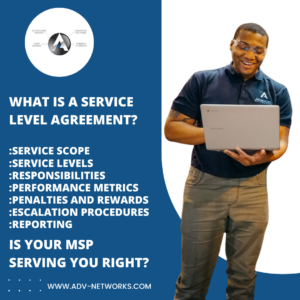
What is a Service Level Agreement?When choosing a managed IT service provider, understanding their reputation is paramount. A reputable provider will have a track record of delivering reliable services and exceptional customer support. Look for client testimonials, case studies, and reviews to gauge their performance. Assess their certifications and partnerships with technology vendors, which can be indicative of their expertise. A positive reputation signifies trustworthiness, reliability, and the ability to meet your IT needs effectively, making it a crucial factor in the decision-making process.
Service Level Agreements (SLAs)

Understanding the terms of the service agreement and the level of support you can expect.

Service Level Agreements (SLAs) are crucial when selecting a managed IT provider in Los Angeles. Review SLAs carefully to understand the level of service, response times, and support availability. A well-defined SLA ensures alignment with your business needs, guaranteeing that the provider meets your expectations and delivers reliable IT services.

What is a Service Level Agreement?

The Future of Managed IT Services in Los Angeles

As technology continues to evolve, what can Los Angeles businesses expect from Managed IT Services in the future?

IT consulting in Los AngelesEmerging Technologies

An overview of cutting-edge technologies that will shape the future of IT services.

The future of Managed IT Services in Los Angeles is intrinsically linked to emerging technologies. As the city continues to be a global tech hub, innovations like Artificial Intelligence (AI), the Internet of Things (IoT), and edge computing will play pivotal roles. AI-driven automation will enhance proactive problem-solving and predictive maintenance. IoT will optimize asset management and connectivity. Edge computing will reduce latency and boost real-time data processing. Cybersecurity will evolve with advanced threat detection using machine learning. These emerging technologies will enable Managed IT Service providers in Los Angeles to offer more agile, secure, and efficient solutions, ensuring businesses remain competitive in a rapidly changing digital landscape.

Adapting to Change

How Managed IT Services providers will adapt to meet the evolving needs of Los Angeles businesses.

Managed IT service providers in Los Angeles are highly adaptable, evolving to meet the changing needs of businesses. They embrace emerging technologies, such as cloud computing and AI, to enhance service delivery. The shift to remote work has led to robust cybersecurity measures and improved support for distributed teams. Providers also offer scalable solutions to accommodate the growth of businesses. In a dynamic city like Los Angeles, Managed IT service providers remain at the forefront of innovation, ensuring that companies can navigate evolving technological landscapes with confidence.

Conclusion

Summing up the key takeaways from this guide and emphasizing the role of Managed IT Services in unlocking success for businesses in Los Angeles.

In a city as dynamic and competitive as Los Angeles, the right technology partner can make all the difference. Managed IT Services offer a pathway to efficiency, growth, and security. By embracing these services, businesses in the City of Angels can unlock their full potential and soar to new heights of success.

Contact IT Consultants in Los Angeles to Learn What Modern Email Fraud Looks Like

Knowing the Signs

IT consultants in Los Angeles have to continuously maintain familiarity with the latest fraudulent enterprises involving email. The best security can’t outpace “social engineering” hacks. Cybercriminals use human nature against people to obtain privileged information–often by pretending to be someone or something they’re not. But if you know the signs of such phishing attacks, you’ll less likely be taken in.

Clear Signs of a Phishing Scam

Keep in mind, what defines a phishing scam continuously changes. As targets learn what to look for, scammers alter tactics. That said, the following features of scam emails tend to be pretty common:

  • Emails That Come Out of the Blue Without Solicitation
  • Horrible English and Strange Time Stamps
  • When URLs in an Email Aren’t Real
  • URLs That Just Don’t Match

Emails That Come Out of the Blue Without Solicitation

One of the most common phishing emails is the type that seems to come out of nowhere and demand certain privileged information. It might say you won in a raffle, or that you’re going to be in trouble with the government if you don’t do something. If you’ve got a PAB, or Phishing Alert Button, you can send such emails to your IT department for examination. Usually, these emails won’t be legitimate. Sometimes, they’re even unsophisticated.

Horrible English and Strange Time Stamps

IT consultants in Los Angeles advise that emails with ridiculous English are probably phishing scams. Poor syntax, poor punctuation, bad spelling and grammar, improper capitals, wrong vocabulary–these are all signs of an email drafted by some individual or group of hackers from another country.

Another red flag is if the email timestamp is, for instance, at three in the morning, or a time that doesn’t match with when the email should be sent.

When URLs in an Email Aren’t Real

Suppose that you get an email saying your Facebook account has been hacked. It tells you to go to www.22.fatchebox.com. Beware–that’s a scam. It may look legitimate, but it’s not. Watch out for such situations.

URLs That Just Don’t Match

If the URL in the link doesn’t match the name of the business it is supposed to represent, that’s another red flag. So if you got an email from “Amazon.com” but the URL is “deals.amazonian.web”, that’s a scam.

Being Aware of the Scams Out There

IT consultants in Los Angeles through Advanced Networks advise you to be very suspicious of unsolicited emails with bad English, inexplicable timestamps, fake URLs, and URLs that don’t match the companies they claim to represent.

While these aren’t the only signs indicating a phishing attempt, they are some of the most relevant. Contact us to learn more.

IT Consultants in Los Angeles Help Your Company Overcome Common Tech Issues

IT consultants in Los Angeles point out that the modern world is digital and much of that digitization is decentralized. 

Increasingly Central Aspects of Daily Operations

Cloud computing and the Internet of Things (IoT) changed the game. From there, remote operations of a decentralized variety came along and changed it again. 

This sort of constant flux defines tech. That means your business needs to have a handle on it.

Areas of Focus for Your Business

Establish categories of management as a means of simplifying the complication of IT needs. Right now, managed services in Los Angeles suggest exploring the following tactics to help you:

  • Cloud Options and Network Management Plans
  • Proper Consultations about Data Security Issues with New Networks
  • Best Practices Against Backup Issues and Lack of Mobility

Cloud Options and Network Management Plans

IT consultants in Los Angeles help you determine what cloud options are best for your business. Some network management plans incorporate a total cloud solution, others advise hybrid options. Sometimes, you use one cloud subscription to back up another. Consultation helps you find your balance.

Proper Consultations about Data Security Issues with New Networks

New networks will have vulnerabilities based on employee education. They’ll also have issues related to varying interface complications and ongoing management needs. Consultation is key in helping overcome these issues.

Best Practices Against Backup Issues and Lack of Mobility

Managed services providers in Los Angeles strongly advise having backup best practices define data management. Cloud-to-cloud backup was briefly alluded to earlier. Beyond that tactic, on-site backups are smart as well.

However, decentralization makes sense as mobility is at a premium in modern IT circles. The mobile component is playing an increasingly integral part in modern business.

This moving target virtually demands working with tech professionals for security, as well as optimal operations overall.

Working With Consultants to Find the Best Options in IT Management

IT consultants in Los Angeles through Advanced Networks can help you manage varying cloud alternatives to how you manage your network overall. Also, if you’re establishing a new network, MSPs assure network management plans are representative of that change. 

We can also help you determine specific mobility needs and the best solutions to back up your data. To learn more, contact us.

Why IT Consultants in Los Angeles Strongly Advise Cybersecurity Solutions For Your Business

An Increasingly Impacting Issue

IT consultants in Los Angeles will advise that you can’t get enough security for your data network, regardless of company size. Certainly, some companies are at greater risk of hacks than others. 

Keep in mind, however, that smaller businesses tend to have looser security, making them more likely cybercrime targets. This issue gets worse as technology becomes more integral.

Strategies For Better Cybersecurity

Managed services firms in Los Angeles suggest a few key, straightforward steps toward enhanced security overall. Security upgrades in the future will likely follow these segues to a certain degree:

  • Employee Training At Intervals
  • Firewalls and Antivirus Software
  • Monitoring, Support, and Remote Management

Employee Training At Intervals

IT consultants in Los Angeles note one of your most important means of defense will involve training employees to identify, recognize, and counteract known tech threats. Once you’ve trained employees, you’ll need to provide refresher courses in one way or another every couple of months. New threats develop in conjunction with tech breakthroughs.

Firewalls and Antivirus Software

Firewalls and antivirus software are necessary but don’t retain effectiveness perpetually. There comes a time when such protections are essentially inert owing to collateral tech advancements. So you’ve got to upgrade firewalls and antivirus software at intervals just as you train employees at intervals. Working with a tech company can help you consolidate and combine upgrades.

Monitoring, Support, and Remote Management

Managed services providers in Los Angeles can also be instrumental in helping you find and secure monitoring solutions, remote support options, and remote management. Properly done, devices can be rebooted or shut down remotely, stopping viral spread before it becomes especially impacting.

More Effectively Securing Your Business Against Diverse Cybersecurity Threats

IT consultants in Los Angeles through Advanced Networks help you train employees properly at the right intervals. We can also help you acquire and upgrade both firewalls and antivirus software. Finally, our consultants can be very helpful in assisting your business as they secure monitoring, support, and remote management solutions. Contact us to learn more.

Selecting the Right Email Hosting Service with the Help of IT Consultants in Los Angeles

Because email services are crucial to your business, it’s wise to seek expert advice from IT consultants in Los Angeles to ensure your choice of email service provider fits your requirements.

What Are Your Most Crucial Email Requirements?

It is not easy to evaluate email service companies unless you know what you need. Start by considering: 

  • The devices and software you use. Do you intend to keep using your present email client (like Microsoft Outlook)? Which mobile devices are used by your employees?
  • How do you expect your company to expand? If you desire to hire a large number of people in the following months, be sure your email service provider makes it simple to create new accounts.
  • What number of email addresses do you need? You’ll typically need one for each employee in your company, as well as any general addresses for sales inquiries and support.

Your Email Service Provider’s User Support

IT consultants in Los Angeles can advise you what kind of assistance your email provider can offer.

If you send and receive most of your emails within business hours, round-the-clock service is probably unnecessary. Make sure you find a service level agreement that specifies how quickly support will respond and what levels of service availability you can accept.

Email Software and Technology

If your company already has an email system, ensure it can be transferred to the new email service provider. Because there may be some downtime, be sure you trust the provider’s ability.

Aside from migration, your corporate email provider can provide services based on the following technologies:

  • Post Office Protocol 3 (POP3) – Using POP3, you download email messages to your device and delete them from the central server. It usually limits each user to utilizing only one computer to send and receive email.
  • Internet Message Access Protocol (IMAP) – IMAP keeps a log of messages read and replied to on a central server. Therefore, you can access your entire inbox from any computer.
  • Microsoft Exchange – Microsoft has developed its email system. Messages are centralized, but it also includes other features like shared contact lists and calendars. 
  • HTTP or webmail – Webmail services allow you to send and receive emails using either a traditional email client or a web browser. 

Choosing an email service provider that offers Exchange or IMAP will enable you to access your email from multiple locations or send and receive emails from mobile devices. 

These systems are far more versatile than POP3.

Mailbox Size and Archiving

Each mailbox in your business is usually limited in size by the email service provider. This limit determines the maximum number of messages you may store at any given moment.

It’s shocking how quickly your inbox can fill up if you send and receive many emails and work with many attachments. Make sure your provider offers at least 5GB (gigabytes) of storage.

Mobile Email Access

Almost all email providers allow clients to send and receive email via mobile devices, such as smartphones. The majority of mobile devices support IMAP, POP3, and Exchange accounts.

However, make sure your email provider supports the mobile devices that your employees use. You should provide clear instructions for getting everything to work.

Security and Backups

If you are considering an email provider, ask how they protect and back up your data. Ensure that their email servers are redundant and that your data is backed up in multiple locations.

Many services additionally include anti-spam, anti-ransomware, and anti-virus security. This service adds an extra layer of protection by filtering suspicious emails before they reach your inbox.

You can find reliable, secure, cost-effective email hosting services with the help of our IT consultants in Los Angeles! Let Advanced Networks handle your email hosting needs. Our team of experts can assist you every step of the way. Contact us now for further information or a quote.

IT Consultants in Los Angeles Advise WFH Arrangements Take Key Measures to Enhance Security

IT consultants in Los Angeles are positively inclined toward work-from-home (WFH, arrangements for a variety of reasons; not least of which are decentralization and associated potential benefits across the world. A decentralized web can’t be censored, travel costs are reduced, hardware costs are reduced, and potential benefits go on. However, there are operational vulnerabilities to consider.

Router Issues and Resolution

Managed services providers (MSPs) in Los Angeles advise that you should ensure operations will be secure from known threats. There are a number of ways to do this, one involves identifying areas of security that cybercriminals are likely to use. Here are several considerations for secure WFH infrastructure:

Work With MSPs for Internal Security Against Questionable Routers

IT consultants in Los Angeles recommend remote monitoring and management, or RMM, for any remote operations. RMM protocols make it possible to “eject” a questionable router from having access to your network. However you do it, it’s smart to have a way of monitoring access requests and denying access should questionable data emerge.

Secure Old Routers – Employees Need New Ones Sometimes

Oftentimes, “legacy” routers are vulnerable based on software and hardware limitations that can’t be corrected, as they are inherent to design. While some routers can be “secured”, others need to be updated; find a way to assure your employees have routers that won’t compromise your business.

Ensure Password Management Maintains Security

You need to put together strong password protocols that are effectively managed over the long-term. You’ll need new ones at intervals, and each new password will have to be complex enough that it acts securely. MSPs can be very helpful in that regard.

Securing WFH Infrastructure

IT consultants in Los Angeles advise WFH infrastructure for expense optimization and safety for many businesses, so it’s important to ensure such operational infrastructures are secure. RMM protocols applied to routers make sense, securing or replacing old routers is also wise, and helping personnel appropriately utilize password protection protocols is key. Contact us at Advanced Networks to learn more on how to make remote working efficient and secure with tech solutions.

IT Consultants in Los Angeles Advise: Fortify Your Business Against Increasingly Damaging Ransomware

IT consultants in Los Angeles strongly advise businesses to keep careful watch for varying ransomware scams. Because many businesses don’t have proper security and don’t expect to be the target of such attacks, they often have no choice but to pay. If they don’t, they can’t operate further since necessary information is lost. So ransomware is very profitable for cybercriminals.

Recognizing New Kinds of Ransomware

Managed services providers (MSPs) in Los Angeles recommend end-to-end security as feasible, password protection protocols, email “sandboxes” which “detonate” questionable attachments and continuously educating staff pertaining to known ransomware dangers. Consider the following ways such scammers are upping the ante if you think any of that is “overkill”.

Ransomware Scammers Are Demanding More and More

IT consultants in Los Angeles caution businesses to be especially careful in financial transactions and associated policies. Ransomware scammers understand two things that give them an edge. For one, vulnerable businesses must retain their information, meaning they’re more likely to pay up. Two, inflation is changing the economic game; so they’ve got to demand more by proxy.

Means of Ransomware Delivery Are Sneakier Than Ever

Phishing and spear-phishing utilize social engineering in conjunction with traditional cybercrime to hoodwink unsuspecting businesses more prolifically than ever before. It’s absolutely paramount to educate employees and keep up-to-date on the latest ransomware threats that are known by tech professionals.

The Bitcoin Complication: Be Careful If You’ve Got a Lot

MSPs caution any business dealing in cryptocurrency to be very careful of ransomware attacks. Potentially, since 2018 approximately $5.2 billion in bitcoin has been stolen. If true, that’s substantial! Work with MSPs to protect yourself accordingly.

Preparing and Protecting Operations from Ransomware

Our IT consultants in Los Angeles can help you secure your business against increasing ransomware demands, sneakier and sneakier attacks, and specific targeting which centers its sites on cryptocurrency. Contact us at Advanced Networks for more information.